


An Organic Food Shop in Bangladesh offers naturally grown and minimally processed food products, including fresh produce, grains, dairy, honey, spices, and healthy grocery items. These shops focus on providing food produced without harmful synthetic pesticides or chemical fertilizers whenever possible. Choosing a trusted organic food shop helps customers access fresher ingredients, transparent sourcing, and healthier options for daily meals while supporting sustainable farming practices.
Standards & Requirements for Organic Food
Organic food must meet specific standards and certification requirements established by recognized regulatory authorities. For example, the USDA Organic certification in the United States and the EU Organic certification in Europe verify that food has been produced according to approved organic farming practices.
To be considered organic, food generally needs to meet the following requirements:
1. No Synthetic Fertilizers or Pesticides
Organic farming avoids the use of synthetic fertilizers, chemical pesticides, herbicides, and artificial growth hormones. Instead, natural compost, organic fertilizers, and biological pest control methods are used.
2. GMO-Free Production
Organic food must be produced without the use of Genetically Modified Organisms (GMOs) or genetically engineered ingredients.
3. Sustainable Farming Practices
Organic farms follow environmentally friendly practices such as crop rotation, green manure, composting, and biofertilizers to maintain soil fertility and reduce environmental impact.
4. Responsible Animal Farming
Organic livestock must be raised in natural, humane conditions without the routine use of antibiotics or synthetic growth hormones. Animals should have adequate outdoor access and proper welfare standards.
5. Organic Animal Feed
Livestock raised for organic meat, milk, or eggs must be fed certified organic feed that is free from GMOs and synthetic additives.
6. Environmental Protection
Organic farming emphasizes protecting soil health, conserving water, promoting biodiversity, and reducing pollution through sustainable agricultural practices.
7. Natural Processing
Organic food processing avoids artificial colors, flavors, preservatives, and other synthetic additives. Products should be minimally processed using natural methods to preserve their nutritional value and quality.
Only products that comply with these recognized organic farming and processing standards can be marketed and certified as organic.
Types of Products Offered by Organic Food Shops
- Organic Fruits & Vegetables: Fresh organic fruits and vegetables grown with minimal or no synthetic pesticides and fertilizers.
- Organic Rice, Lentils & Grains: Organic rice, lentils, wheat, oats, quinoa, and other whole grains for healthy everyday meals.
- Organic Spices, Herbs & Salt: Organic turmeric, cumin, coriander, chili powder, herbs, Himalayan pink salt, and other natural seasonings.
- Organic Honey: Naturally harvested honey with minimal processing, commonly used as a healthy sweetener.
- Organic Dairy Products: Organic milk, ghee, butter, yogurt, cheese, and other naturally produced dairy products.
- Organic Tea & Coffee: Organically grown tea leaves and coffee beans produced using eco-friendly farming practices.
- Organic Oils: Cold-pressed mustard, coconut, sesame, olive, and other natural cooking oils.
- Healthy Snacks & Superfoods: Organic nuts, seeds, dried fruits, cereals, granola, biscuits, and natural sugar alternatives for healthy snacking.
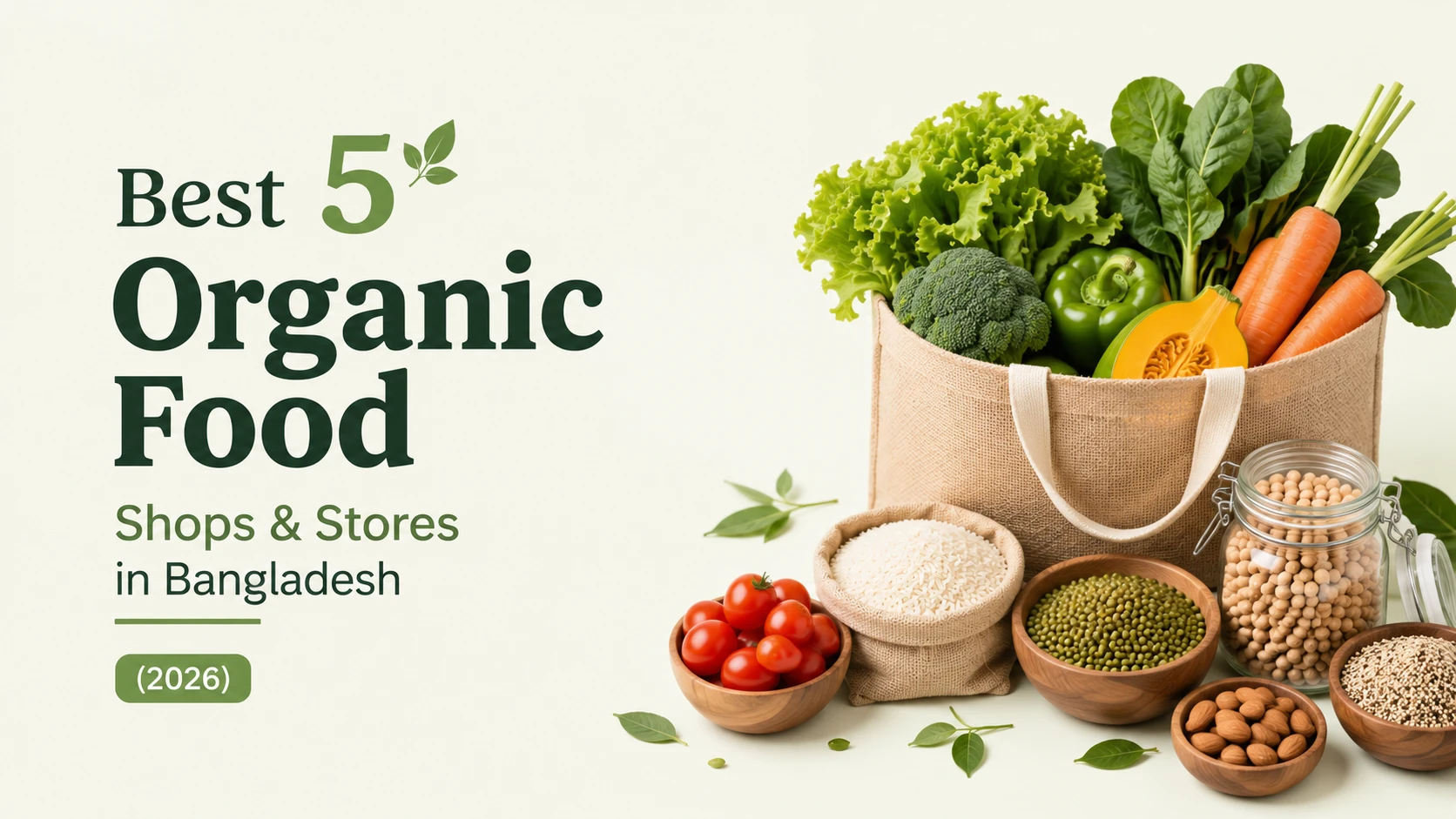
Best 5 Organic Food Shops & Stores in Bangladesh (2026)
|
No. |
Name |
Best For |
Google Rating* |
|
1 |
Certified organic groceries |
4.7–4.9 |
|
|
2 |
Fresh vegetables & groceries |
4.6–4.8 |
|
|
3 |
Premium organic food products |
4.7–4.9 |
|
|
4 |
Natural and healthy foods |
4.5–4.8 |
|
|
5 |
Imported & local organic products |
4.5–4.8 |
Google rating ranges are approximate and may vary across platforms and over time as new reviews are added.
How to Choose the Best Organic Food Shop in Bangladesh
Choosing the right organic food shop helps ensure you receive authentic, safe, and high-quality products that support a healthier lifestyle. Before making a purchase, consider the following factors:
Product Authenticity
Choose stores that clearly disclose product sourcing and prioritize genuinely organic products over misleading marketing claims.
Product Quality & Freshness
Freshness is essential for organic foods. Check packaging, manufacturing and expiry dates, storage conditions, and overall product quality before purchasing.
Organic Certification
Give preference to products certified by recognized organic certification bodies or those with transparent farming and sourcing information.
Product Variety
A reliable organic food shop should offer a wide selection of fruits, vegetables, grains, oats, spices, honey, oils, dairy products, nuts, seeds, and other healthy grocery essentials.
Pricing & Value
Organic foods often cost more due to sustainable farming practices. Compare prices across different stores while considering product quality, authenticity, and packaging.
Customer Reviews
Read customer reviews to evaluate product freshness, authenticity, delivery performance, packaging quality, and overall shopping experience.
Availability & Delivery
If shopping online, confirm delivery coverage, delivery time, product availability, and proper packaging to ensure products arrive in good condition.
Customer Support
Choose a store that provides responsive customer service, clear product information, and hassle-free support for inquiries, returns, or order-related issues.
Tip: Always check product labels, certification details, ingredient lists, expiry dates, and supplier information before purchasing. Buying from trusted organic food shops increases the likelihood of receiving genuine, high-quality organic products.
Organic Food Industry Statistics in Bangladesh (2026)
|
Metric |
Statistics |
Source |
|
Organic Food Market Growth (2026–2032) |
8.5% CAGR |
6Wresearch |
|
Organic Fruits & Vegetables Market Size (2025) |
USD 315 Million |
6Wresearch |
|
Organic Fruits & Vegetables Market Forecast (2032) |
USD 439 Million |
6Wresearch |
|
Organic Fruits & Vegetables Market Growth (2026–2032) |
4.9% CAGR |
6Wresearch |
|
Key Growth Drivers |
Health awareness, rising disposable income, urban demand & online retail expansion |
6Wresearch |
Organic food demand in Bangladesh continues to grow as consumers become more health-conscious and prefer chemical-free products. Fresh organic fruits and vegetables remain the largest product segment, while supermarkets, specialty organic stores, and online grocery platforms are making organic products more accessible across the country.
Frequently Asked Questions
1. Which Organic Food Shop is best in Bangladesh?
The best choice depends on your needs. Khaas Food is well known for premium grocery products, Ultimate Organic Life focuses on certified organic items, Ghorerbazar BD offers fresh produce, while NATURO and La Organika provide a wide selection of healthy food products.
2. How does Bipony select and rank these shops?
Bipony ranks organic food shops based on business reputation, customer reviews, product quality, service standards, market presence, delivery coverage, publicly available business information, and overall customer experience.
3. How can I verify whether organic food is authentic?
Check product labels, certification information, manufacturing details, expiry dates, and ingredient lists. Buying from trusted retailers with transparent sourcing helps reduce the risk of counterfeit products.
4. Why are organic foods usually more expensive?
Organic farming generally involves lower production volumes, stricter farming practices, and higher labor costs. These factors often result in higher retail prices compared to conventional food products.
5. Do organic food shops deliver across Bangladesh?
Many organic food stores offer home delivery in major cities, while some also provide nationwide courier delivery depending on the product category and location.
6. What payment methods do organic food shops accept?
Most stores accept cash, debit and credit cards, bank transfers, and mobile financial services such as bKash, Nagad, and Rocket. Online stores may also support digital payment gateways.
7. Are organic products completely chemical-free?
Organic farming limits or avoids the use of synthetic pesticides and fertilizers, but certification standards vary. Always review product labels and certification details before purchasing.
8. What products can I buy from an organic food shop?
Most shops sell organic fruits, vegetables, rice, lentils, spices, honey, dairy products, cooking oils, tea, coffee, healthy snacks, and natural grocery items.
9. How should organic foods be stored?
Store organic foods according to the manufacturer's instructions. Fresh produce should usually be refrigerated, while grains, spices, and dry foods should be kept in a cool, dry place.
10. Is buying organic food worth it?
Many consumers choose organic food for its farming practices, ingredient transparency, and reduced use of synthetic agricultural chemicals. The right choice depends on your dietary preferences, budget, and availability of trusted organic products.
Sources: